Drop in a spreadsheet, pick the column you want to predict, and get back a trained, tuned model, plus a plain account of every decision that went into it.
Every new dataset raised the same questions: which model suits it, how to clean it, which settings to use. The answers already existed as textbook rules. I didn't want to look them up and weigh them again each time.
So I turned the data into numbers (column types, missing values, distinct counts, the nature of the target) and gave those numbers a pathway. At every fork, an established rule or a fair head-to-head test sends them towards the best-suited method. I don't pick the algorithm. I'm the mediator between the data and the rules.
A penguin dataset goes in. The goal: predict each bird's body mass from its species, island, sex and bill and flipper measurements. No code is written at any point.
Every column's type, missing values and number of distinct values, shown before anything is trained.
Reads the target column and decides between classification and regression. You can override it with one click.
Fills gaps, scales numbers and encodes categories, all inside one scikit-learn pipeline so the test data never leaks into training.
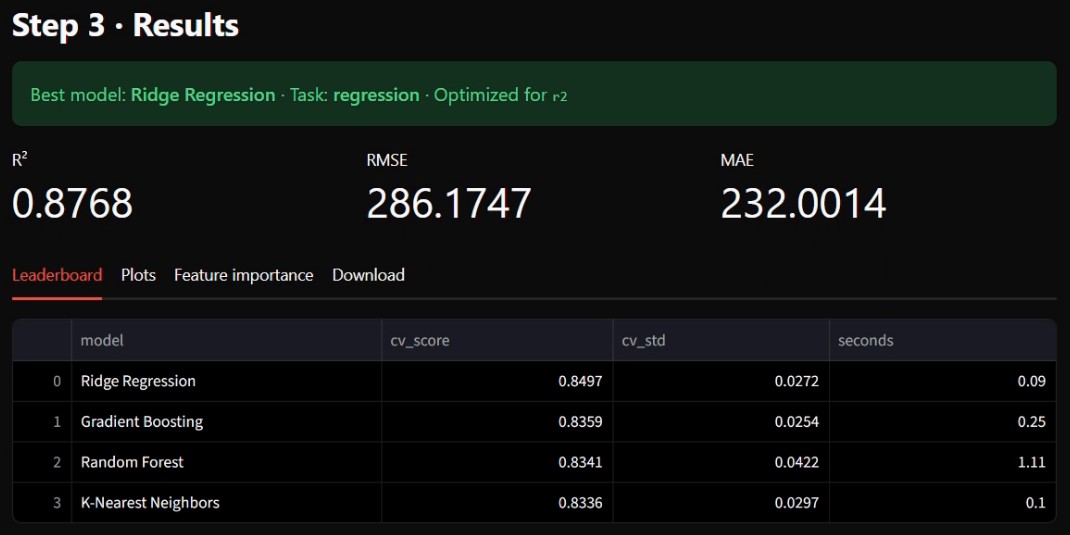
Four model families compete under cross-validation, ranked on the metric that suits the task: ROC-AUC, weighted F1 or R².
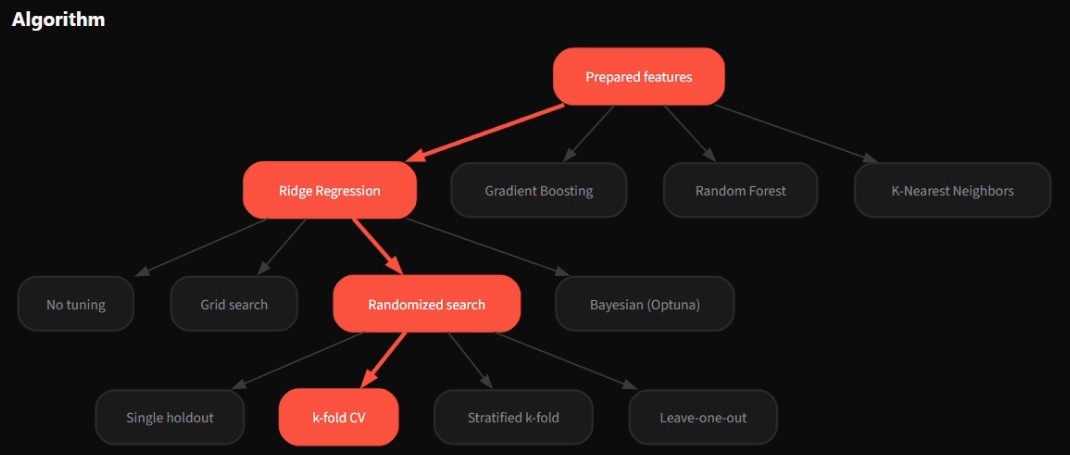
A randomized hyperparameter search on the best model, which reaches strong settings without the cost of a full grid.
Scored on data it never saw, with feature importance, then downloadable as a ready-to-use model file and a report.
Every candidate's cross-validated score, its spread across folds and its training time sit side by side, so it's clear why the winner won.
On the penguins, the tuned winner explained 88% of the variation in body mass on birds held back from training.
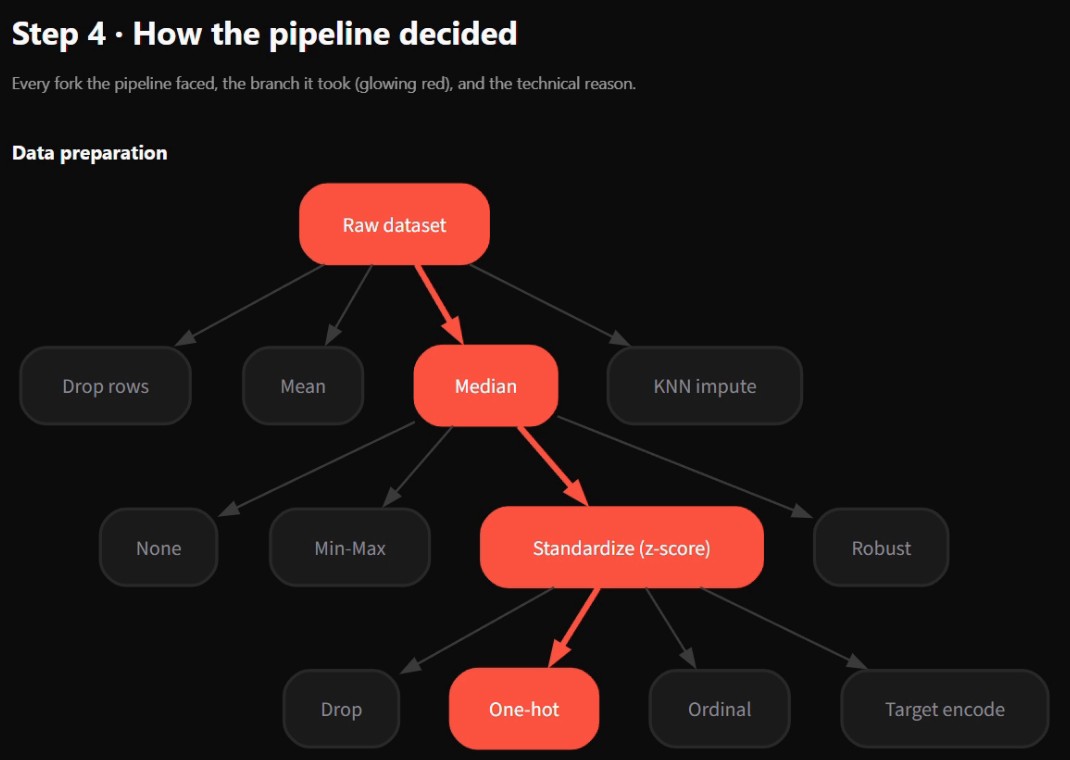
After a run, the app draws the decisions it faced as a tree. The options it considered stay grey, the path it chose glows, and each choice comes with a short technical reason: why median instead of mean, why one-hot instead of ordinal, why randomized search instead of a grid.